
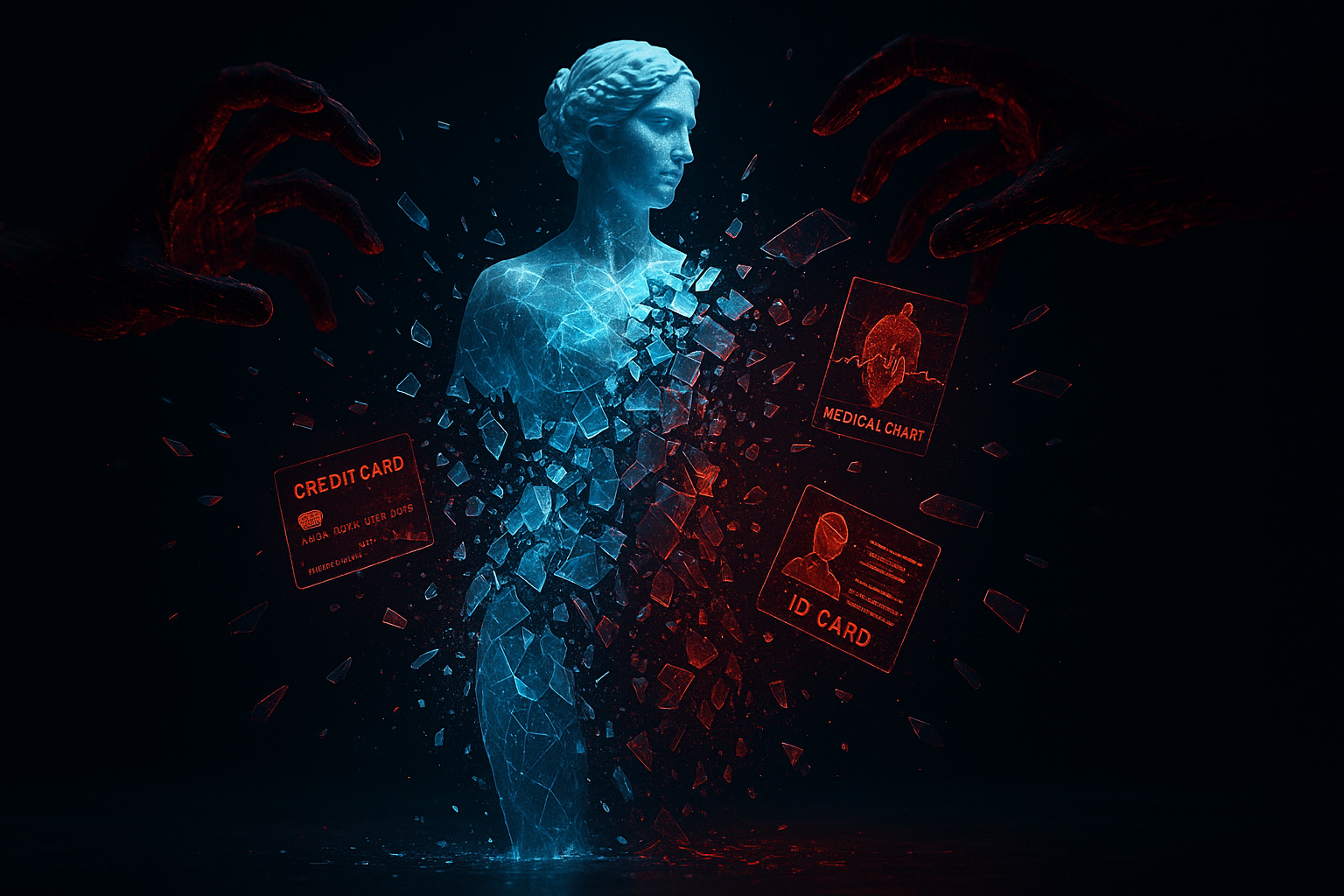
Threat Briefing: Deconstructing the Modern Vectors of Identity Theft
In the contemporary digital landscape, a person's identity is not a singular concept; it is a composite asset, a constellation of data points distributed across countless networks. The compromise of this asset—identity theft—is not a single type of crime, but a sophisticated, multi-vector threat with devastating and far-reaching consequences.
This is not a matter of a stolen password. It is the hijacking of a person's entire operational existence. This intelligence briefing will deconstruct the primary vectors of modern identity theft, providing the necessary framework for a comprehensive, proactive defense.
Vector 1: Visual Identity Compromise (Face Theft)
This is the foundational and most visceral form of identity theft. Malicious actors harvest your most unique identifier—your face—from public sources, social media, or data breaches. This visual data is then weaponized. It is used to bypass biometric security systems, to create fraudulent "deepfake" media for reputational attacks, or to lend credibility to sophisticated deception campaigns ("catfishing"). The proactive monitoring of your visual assets across the open web is no longer an option; it is a critical component of modern identity security.
Vector 2: Financial Identity Compromise (Credit Theft)
This is the most common and direct form of identity theft. Threat actors use your core personal data—name, address, social security number—to open fraudulent lines of credit, secure loans, or execute unauthorized transactions. The immediate impact is financial, but the secondary, more insidious damage is to your creditworthiness, which can take years to repair and can impede your ability to secure legitimate financing for housing, education, or business.
Vector 3: Medical Identity Compromise
Perhaps the most dangerous vector, medical identity theft occurs when a malicious actor uses your identity to obtain medical services, treatments, or prescription drugs. The consequences are twofold. First, you become financially liable for fraudulent medical bills that can be financially ruinous. Second, and more critically, the fraudulent data from the impostor's treatment corrupts your own medical records. This can lead to misdiagnoses, incorrect treatments, and life-threatening medical errors in your future care.
Vector 4: Child Identity Compromise
Children are the highest-value targets for identity thieves. They possess a clean, unmonitored credit history—a blank slate that a criminal can exploit for years, often a decade or more, before the crime is ever detected. The theft is typically only discovered when the child, now a young adult, is denied a student loan or a first credit card due to a history of fraudulent activity they never knew existed.
Vector 5: Professional and Governmental Identity Compromise
Threat actors can also target your professional and civic identity. They may use your credentials to gain illegal employment, filing taxes and earning wages under your name, creating a complex and severe liability with revenue services. Alternatively, they may use your identity to fraudulently claim government benefits, such as unemployment or social assistance, which can block you from accessing these critical resources when you legitimately need them.
The Unifying Principle: A Proactive Security Posture
These are not disparate threats. They are facets of a single, overarching challenge. The unifying principle of a successful defense is a proactive, vigilant, and multi-layered security posture. This includes rigorous monitoring of your financial accounts, periodic review of your medical records, and the continuous, active monitoring of your public-facing digital identity, especially your visual assets.
In this environment, ignorance is not bliss; it is a critical vulnerability. Awareness, vigilance, and the deployment of sophisticated monitoring tools are the essential components of a modern identity defense strategy.