
The Synthesis of Reality: AI as the New Architecture for Visual Media
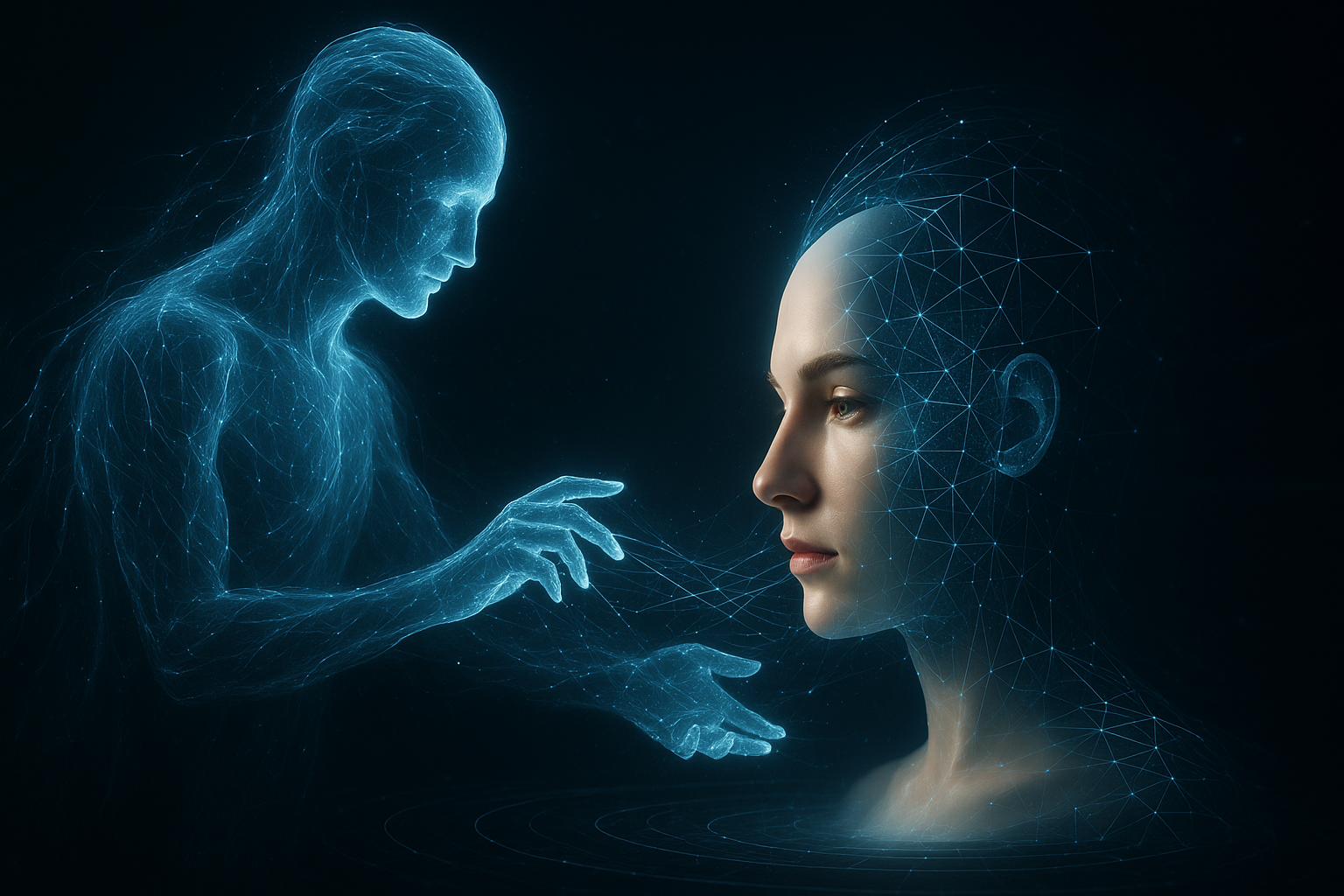
The line between observed reality and generated content is dissolving. This is not an incremental evolution; it is a fundamental paradigm shift driven by Artificial Intelligence. Within the domains of visual effects and animation, AI is no longer a peripheral tool for enhancement. It is the core architecture upon which the next generation of hyper-realistic digital media is being built.
This analysis will examine the key vectors through which AI is redefining the creation of synthetic worlds and digital humanoids, from data-driven character modeling to the procedural generation of complex environments.
High-Fidelity Digital Humanoids: The Data-Driven Soul
The creation of a believable digital character hinges on the replication of nuance. Historically, this has been a labor-intensive process of manual sculpting and keyframing. Today, neural networks and deep learning models have automated and perfected this craft, enabling a new threshold of realism.
AI algorithms, trained on vast datasets of human expression, can now generate infinitesimally subtle facial mechanics—micro-expressions, involuntary muscle movements, and precise lip synchronization—that are the hallmarks of authentic emotion. This data-driven approach moves beyond mere imitation to achieve genuine synthesis, creating characters that resonate with audiences on a subconscious, human level. The result is an unprecedented level of emotional fidelity, bridging the gap between animated construct and believable character.
Procedural Environment Generation: Engineering Emergent Worlds
Beyond character creation, AI excels at architecting the complex, dynamic systems that constitute a believable world. Procedural generation, powered by AI, allows for the creation of vast, non-repetitive environments and the simulation of natural phenomena.
Instead of animating every individual element, developers now define the fundamental rules of a system—the physics of water, the flocking behavior of a crowd, the biomechanics of a forest reacting to wind. The AI then simulates the outcome, generating emergent, hyper-realistic behavior at a scale that would be impossible to achieve manually. A prime example is the 2019 film The Lion King, where AI was instrumental in rendering the complex, authentic movements of entire animal herds and their interaction with the photorealistic environment.
The Bridge Between Data and Creation: The Role of Visual Intelligence
The efficacy of any AI animation system is contingent on the quality and breadth of its training data. To synthesize a realistic human, the AI must first understand one. This is where the synergy between visual intelligence platforms and creative technology becomes critical.
MambaPanel’s core competency—the high-speed, high-accuracy analysis and recognition of visual data—represents the foundational layer of this new creative pipeline. By leveraging advanced face search and image analysis, creators can:
-
Curate Bespoke Datasets: Gather specific visual references required to train AI models for unique character traits or expressions.
-
Ensure Data Provenance: Verify the origin and authenticity of visual data used in modeling, a critical step for both legal and ethical integrity.
-
Inform Character Design: Analyze real-world subjects to inform the creation of entirely new, yet fundamentally believable, digital personas.
This integration transforms face search from a purely investigative tool into a fundamental component of the synthetic media creation process.
The Ethical Framework for Synthetic Media
The power to generate reality necessitates a rigorous ethical framework. As this technology advances, the industry must proactively address the profound implications of synthetic media. Key considerations include data privacy, algorithmic bias in character generation, and the clear demarcation between authentic and generated content.
Responsible innovation demands transparency and accountability. Establishing clear ethical guidelines is not a constraint on creativity, but a prerequisite for building sustainable trust in a world where seeing is no longer believing.
Conclusion: The Future is Synthesized
AI's integration into visual media is not a trend; it is the new standard. It has unlocked a level of realism and creative efficiency that was previously in the realm of science fiction. As this technology continues to mature, its capabilities will only expand, further blurring the lines between the real and the rendered. Understanding and responsibly harnessing this power is the defining challenge and opportunity for the next era of visual storytelling.