
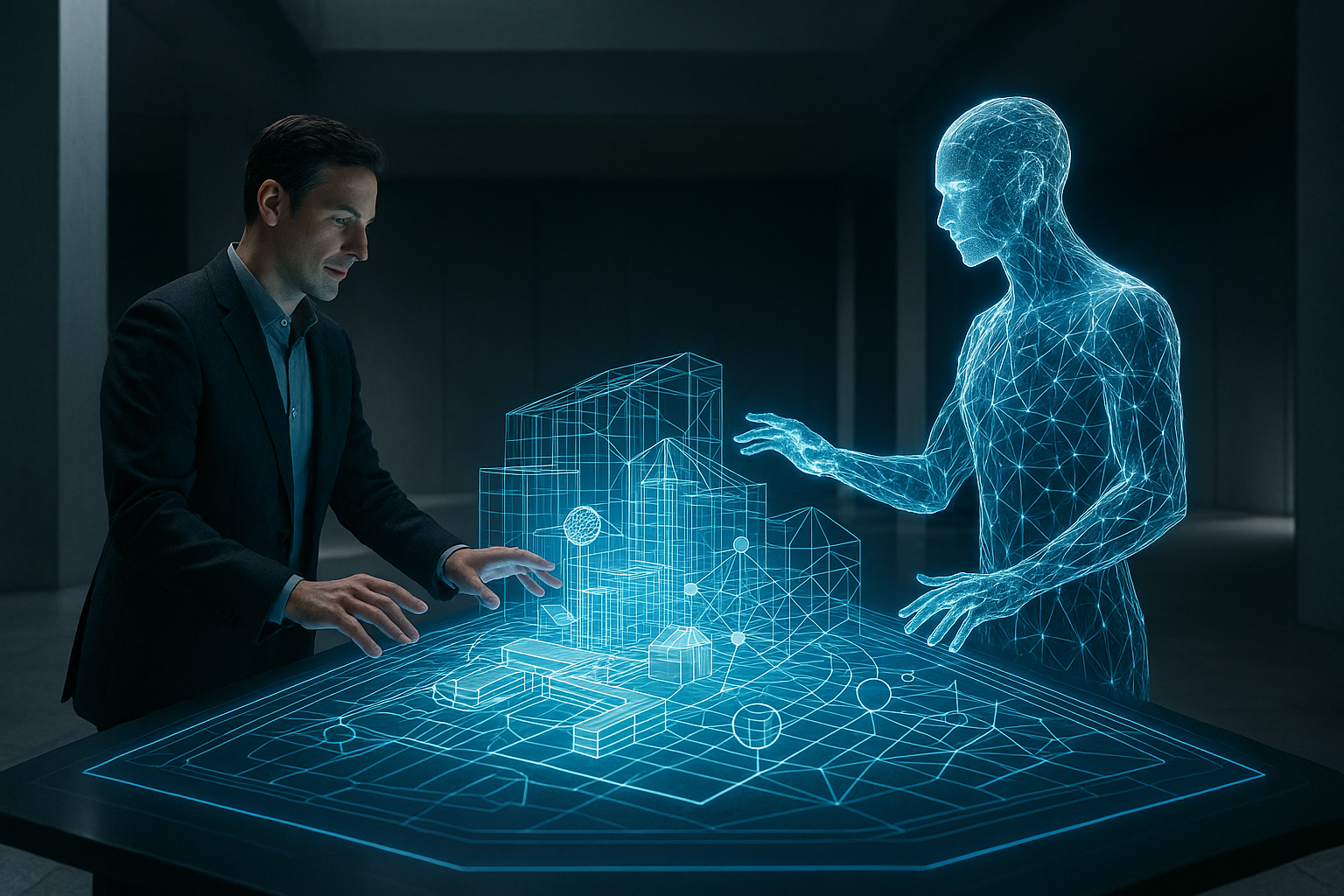
The Next Human-Machine Paradigm: AI and the Restructuring of Modern Work
The integration of Artificial Intelligence into the global workforce is not an upgrade; it is a fundamental restructuring of the very concept of work. We are witnessing a paradigm shift where AI is transitioning from a tool for task automation to a core collaborator in high-stakes decision-making and a catalyst for entirely new industries.
This analysis moves beyond the binary debate of job creation versus displacement to examine the more nuanced reality: the redefinition of roles, the emergence of hybrid intelligence, and the strategic imperatives for navigating this new economic landscape.
From Automation to Augmentation
The initial wave of AI adoption was characterized by automation—the delegation of repetitive, rule-based tasks to machine learning algorithms. This optimized efficiency in sectors from manufacturing to data entry. However, the current, more sophisticated wave is defined by augmentation.
AI is now being deployed as a cognitive partner, enhancing human capabilities in complex, data-rich environments.
-
In Medicine: AI systems analyze diagnostic images and genomic data with a speed and accuracy that surpasses human potential, allowing clinicians to focus on patient care and complex treatment strategy.
-
In Finance: Algorithmic trading and risk analysis models process market data in real-time, providing human analysts with the predictive intelligence needed to make critical investment decisions.
In this model, the AI manages the data, and the human manages the judgment. This symbiotic relationship, or "hybrid intelligence," is becoming the new standard for high-performance roles, elevating human expertise rather than replacing it.
The Emergence of a New Skill Architecture
The integration of AI is forging a new class of professional roles that did not exist a decade ago. The demand is surging for specialists in AI ethics, machine learning engineering, data science, and AI systems integration.
Concurrently, this shift places a premium on inherently human competencies that AI cannot replicate: strategic thinking, complex problem-solving, emotional intelligence, and creativity. Forward-thinking organizations are no longer simply hiring for existing roles; they are investing heavily in upskilling and reskilling their workforce to thrive in an AI-augmented environment. The goal is to create a talent pool that is fluent in the language of both their domain and the AI tools that now define it.
Visual Intelligence: A Core Competency in the New Economy
As our world becomes increasingly documented through visual data, the ability to analyze and verify this information becomes a critical operational capability. Technologies like MambaPanel's AI-powered face search are emblematic of this shift.
Initially conceived for security and personal privacy, this class of technology is now integral to a range of professional functions:
-
Journalism and Research: Verifying the identities of sources and the authenticity of visual evidence.
-
Human Resources: Conducting due diligence and protecting against identity fraud in recruitment.
-
Content Creation: Ensuring the provenance of visual assets and protecting intellectual property.
The ability to rapidly analyze and verify visual data is no longer a niche skill; it is becoming a fundamental component of digital literacy in the modern workforce.
Strategic Imperatives for the AI-Driven Future
The transition to an AI-integrated economy presents both unprecedented opportunities and significant challenges. Navigating this landscape requires a proactive, strategic approach from individuals, organizations, and policymakers.
The core challenge is not a future without jobs, but a future where the definition of a "job" is in constant flux. The imperative is to foster a culture of lifelong learning, adaptability, and critical thinking. We must build an ecosystem where human talent is continuously equipped to collaborate with increasingly intelligent systems.
The future of work is not human versus machine. It is the human, augmented by the machine, operating at a level of intelligence and efficiency previously unimaginable.