
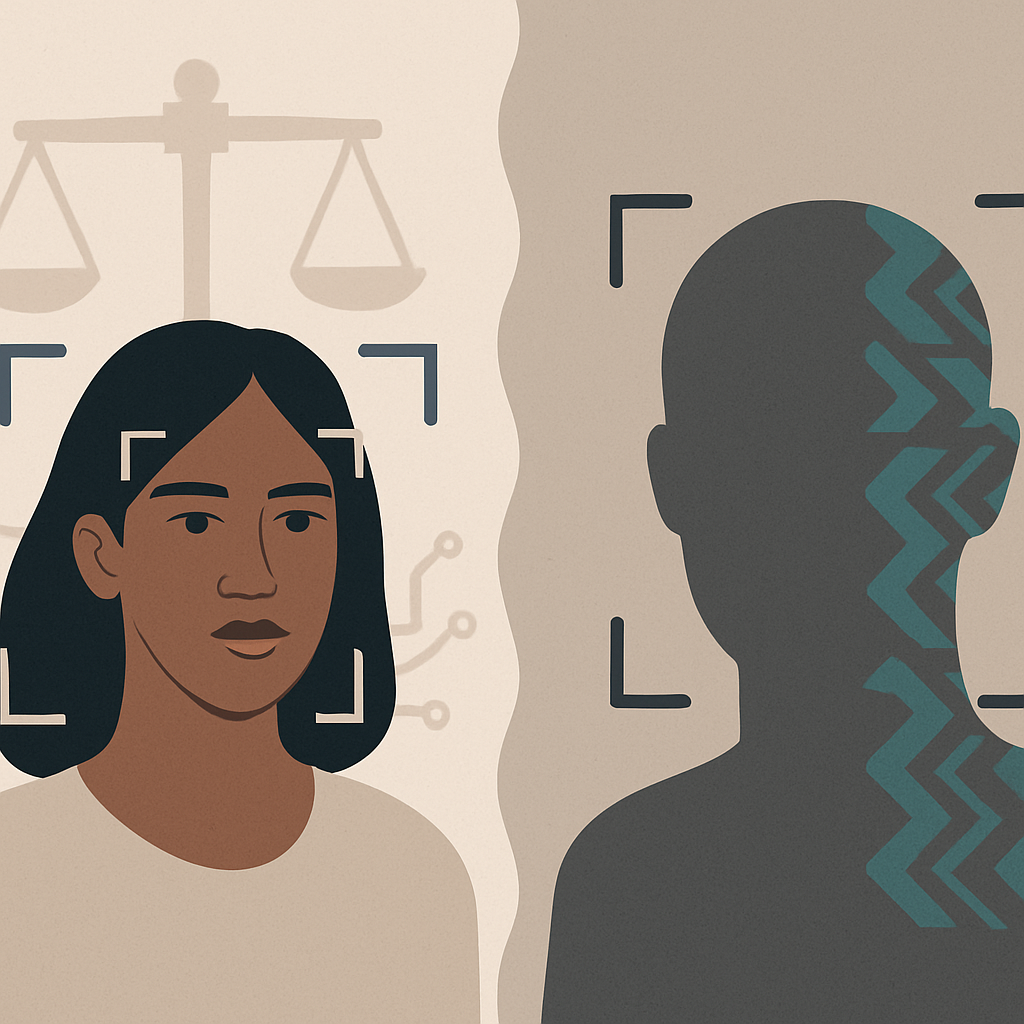
The Challenge of AI Bias in Facial Recognition (And How We Approach It)
Facial recognition technology has rapidly advanced in recent years, offering powerful capabilities in various applications, from security and law enforcement to social media and personalized experiences. At MambaPanel, we're proud to be at the forefront of this technology, providing our users with a leading face search service that leverages a massive database of over 7 billion faces. However, with this power comes a great responsibility: addressing the crucial issue of AI bias.
AI bias in facial recognition refers to the tendency of these systems to perform differently across various demographic groups, often resulting in lower accuracy rates for certain ethnicities, genders, or age groups. This isn't a theoretical problem; it's a real-world challenge that can have significant consequences.
Understanding the Roots of AI Bias
So, where does this bias come from? The answer lies primarily in the data used to train these AI models. Facial recognition systems learn to identify and analyze faces based on vast datasets of images. If these datasets are not diverse and representative of the global population, the resulting AI models can inherit and amplify existing societal biases.
For example, if a facial recognition system is primarily trained on images of individuals with lighter skin tones, it may struggle to accurately identify individuals with darker skin tones. This can lead to misidentification, false positives, and other errors that disproportionately affect certain groups. The consequences of such inaccuracies can be severe, especially in applications like law enforcement, where misidentification can have devastating effects.
Beyond biased datasets, other factors can contribute to AI bias, including:
- Algorithm Design: The specific algorithms used in facial recognition systems can also introduce bias if they are not carefully designed and tested.
- Data Preprocessing: The way images are preprocessed and prepared for training can also influence the performance of the AI model.
- Evaluation Metrics: The metrics used to evaluate the performance of facial recognition systems can also be biased if they are not chosen carefully.
The Impact of AI Bias: Real-World Examples
The impact of AI bias in facial recognition is far-reaching and affects numerous sectors. Here are a few examples:
- Law Enforcement: Inaccurate facial recognition can lead to wrongful arrests and accusations, disproportionately impacting minority communities.
- Security: Biased systems can fail to accurately identify individuals, creating security vulnerabilities and potentially endangering lives.
- Social Media: Facial recognition is used in social media for tagging and filtering content. Biased systems can lead to misidentification and exclusion.
- Hiring: Some companies use facial recognition in the hiring process to assess candidates' emotions and suitability. Biased systems can lead to unfair hiring decisions.
Consider a scenario where a facial recognition system used for airport security consistently flags individuals from a specific ethnic group for additional screening. This not only causes inconvenience and embarrassment but also reinforces discriminatory practices. Or imagine a social media platform where the face tagging feature struggles to recognize faces of people with darker skin, leading to a less inclusive user experience.
MambaPanel's Approach to Mitigating AI Bias
At MambaPanel, we recognize the critical importance of addressing AI bias in facial recognition. We are committed to developing and deploying our technology in a responsible and ethical manner. Our approach involves a multi-faceted strategy that focuses on:
- Diverse and Representative Datasets: We are actively working to expand and diversify our training datasets to ensure they accurately reflect the global population. This includes sourcing images from diverse geographic regions, age groups, and ethnic backgrounds. We also employ techniques to balance the representation of different groups within our datasets.
- Rigorous Testing and Evaluation: We conduct extensive testing and evaluation of our facial recognition systems across various demographic groups to identify and address potential biases. We use a range of metrics to assess performance, including accuracy, precision, recall, and fairness metrics.
- Algorithm Transparency and Explainability: We strive to make our algorithms as transparent and explainable as possible. This allows us to better understand how our systems make decisions and identify potential sources of bias.
- Ongoing Monitoring and Improvement: We continuously monitor the performance of our facial recognition systems in the real world to identify and address any emerging biases. We also invest in ongoing research and development to improve the fairness and accuracy of our technology.
- Human Oversight: We believe that human oversight is essential in mitigating AI bias. Our team includes experts in ethics, fairness, and data privacy who provide guidance and oversight throughout the development and deployment process. We also provide clear mechanisms for users to report potential biases or inaccuracies.
Specifically, regarding MambaPanel's face search technology, we are actively implementing methods to improve accuracy across all demographics. This includes:
- Data Augmentation: We use techniques like data augmentation to artificially increase the size and diversity of our training datasets.
- Adversarial Training: We employ adversarial training methods to make our models more robust to variations in lighting, pose, and other factors that can affect performance.
- Bias Detection Tools: We utilize specialized tools to detect and quantify bias in our models and datasets.
We understand that addressing AI bias is an ongoing process, and we are committed to continuously improving our technology and practices to ensure fair and accurate face search results for all our users.
Looking Ahead: A Future of Ethical AI
The future of facial recognition technology depends on our ability to address AI bias effectively. By prioritizing fairness, transparency, and accountability, we can harness the power of this technology to create a more equitable and just world.
At MambaPanel, we are committed to being a leader in ethical AI development and deployment. We believe that by working together, we can create a future where facial recognition technology is used responsibly and benefits all of humanity.
Learn more about our commitment to ethical AI and our approach to responsible data handling on our About Us page.