
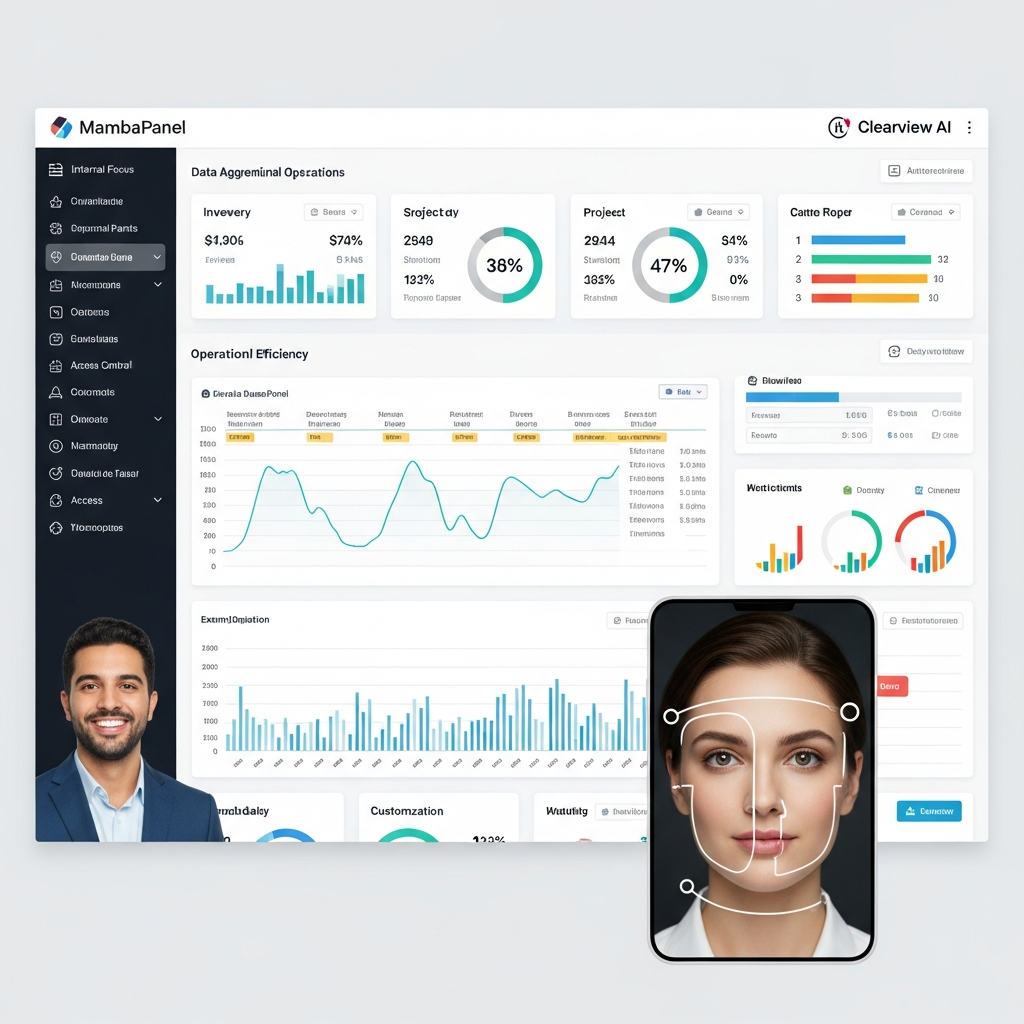
MambaPanel vs. Clearview AI: Understanding the Difference for Public Face Search
The world of face recognition technology is rapidly evolving, offering powerful tools for identifying individuals across the internet. However, it's crucial to understand the nuances and differences between various face search platforms, especially when considering the ethical and privacy implications. In this article, we'll explore the key distinctions between MambaPanel, a leading public-data face search engine, and platforms designed for law enforcement, such as Clearview AI.
What is MambaPanel?
MambaPanel is a sophisticated face search service that utilizes advanced AI technology to help users find publicly available information about individuals. With a database of over 7 billion faces, MambaPanel empowers users to conduct comprehensive searches using facial recognition. We've served over 100,000 users and completed 300,000+ searches, maintaining a 99.9% uptime.
Key features of MambaPanel include:
- Vast Database: Access to a massive index of publicly available face images scraped from across the internet.
- High Accuracy: State-of-the-art AI algorithms ensure accurate and reliable face recognition results.
- User-Friendly Interface: An intuitive platform that makes face search accessible to everyone.
- Focus on Public Data: MambaPanel only indexes publicly available data, ensuring compliance with privacy regulations.
MambaPanel is designed for a wide range of use cases, including:
- Investigative Journalism: Researching individuals and verifying identities for news stories.
- Background Checks: Conducting due diligence on potential employees or business partners (within legal limits).
- Genealogy Research: Identifying relatives in old photos or tracing family history.
- Finding Lost Connections: Reconnecting with old friends or classmates.
Understanding Clearview AI: A Law Enforcement Tool
Clearview AI is a facial recognition company that primarily serves law enforcement agencies. Its database is built from scraping billions of images from across the internet, including social media platforms. Unlike MambaPanel, Clearview AI's primary purpose is to assist law enforcement in identifying suspects and solving crimes.
Key characteristics of Clearview AI:
- Law Enforcement Focus: Designed specifically for use by police departments and other law enforcement agencies.
- Controversial Data Collection: The method of data collection, scraping images from various online sources without explicit consent, has raised significant privacy concerns.
- Limited Public Access: Clearview AI is not generally available to the public.
- Potential for Misuse: Concerns have been raised about the potential for misuse of the technology, including mass surveillance and biased identification.
Key Differences: MambaPanel vs. Clearview AI
The most crucial difference between MambaPanel and Clearview AI lies in their intended use and data collection practices. Here's a breakdown:
- Target Audience: MambaPanel is designed for the general public, while Clearview AI is primarily for law enforcement.
- Data Sources: Both platforms utilize publicly available data, but the scope and methods of data collection may differ. MambaPanel is committed to ethical data sourcing.
- Accessibility: MambaPanel is readily available to anyone, while Clearview AI has limited access, primarily restricted to law enforcement.
- Privacy Considerations: MambaPanel prioritizes user privacy and adheres to strict data protection policies. Clearview AI's data collection practices have faced scrutiny and legal challenges regarding privacy violations.
- Purpose: MambaPanel is a tool for public data exploration, whereas Clearview AI is primarily a tool for criminal investigation.
Why These Differences Matter
Understanding the distinction between platforms like MambaPanel and Clearview AI is crucial for several reasons:
- Privacy: Knowing where your data comes from and how it's being used is paramount. MambaPanel is transparent about its data sources and committed to protecting user privacy.
- Ethical Considerations: Facial recognition technology raises ethical questions about surveillance, bias, and potential for misuse. Choosing a platform that prioritizes ethical data practices is essential.
- Accuracy and Reliability: The accuracy of facial recognition depends on the quality and comprehensiveness of the data. MambaPanel invests in advanced AI algorithms to ensure accurate and reliable results, but it's important to remember that no system is perfect.
- Legal Compliance: Different jurisdictions have varying laws and regulations regarding facial recognition technology. Users should be aware of these laws and ensure they are using the technology responsibly and legally.
MambaPanel: Empowering Users with Public Data
MambaPanel empowers users to access and analyze publicly available data using the power of facial recognition. We are committed to providing a responsible and ethical platform that respects user privacy and adheres to all applicable laws and regulations.
Example Use Case: Imagine a journalist is investigating a story about a public figure. They can use MambaPanel to find publicly available images of the individual, verify their identity, and gather information from various online sources. This can help them build a more comprehensive and accurate picture of the person they are investigating.
Another Example: A user wants to reconnect with a long-lost friend from high school. They have an old yearbook photo but haven't seen the person in years. They can upload the photo to MambaPanel to see if they can find any matching profiles online, potentially leading them to reconnect with their friend.
Conclusion
While both MambaPanel and Clearview AI utilize facial recognition technology, they serve fundamentally different purposes and operate under different ethical frameworks. MambaPanel is a tool for public data, available to everyone, while Clearview AI is primarily designed for law enforcement. Understanding these differences is crucial for making informed decisions about which platform to use and for ensuring responsible and ethical use of facial recognition technology.
We are a tool for public data, available to everyone.