
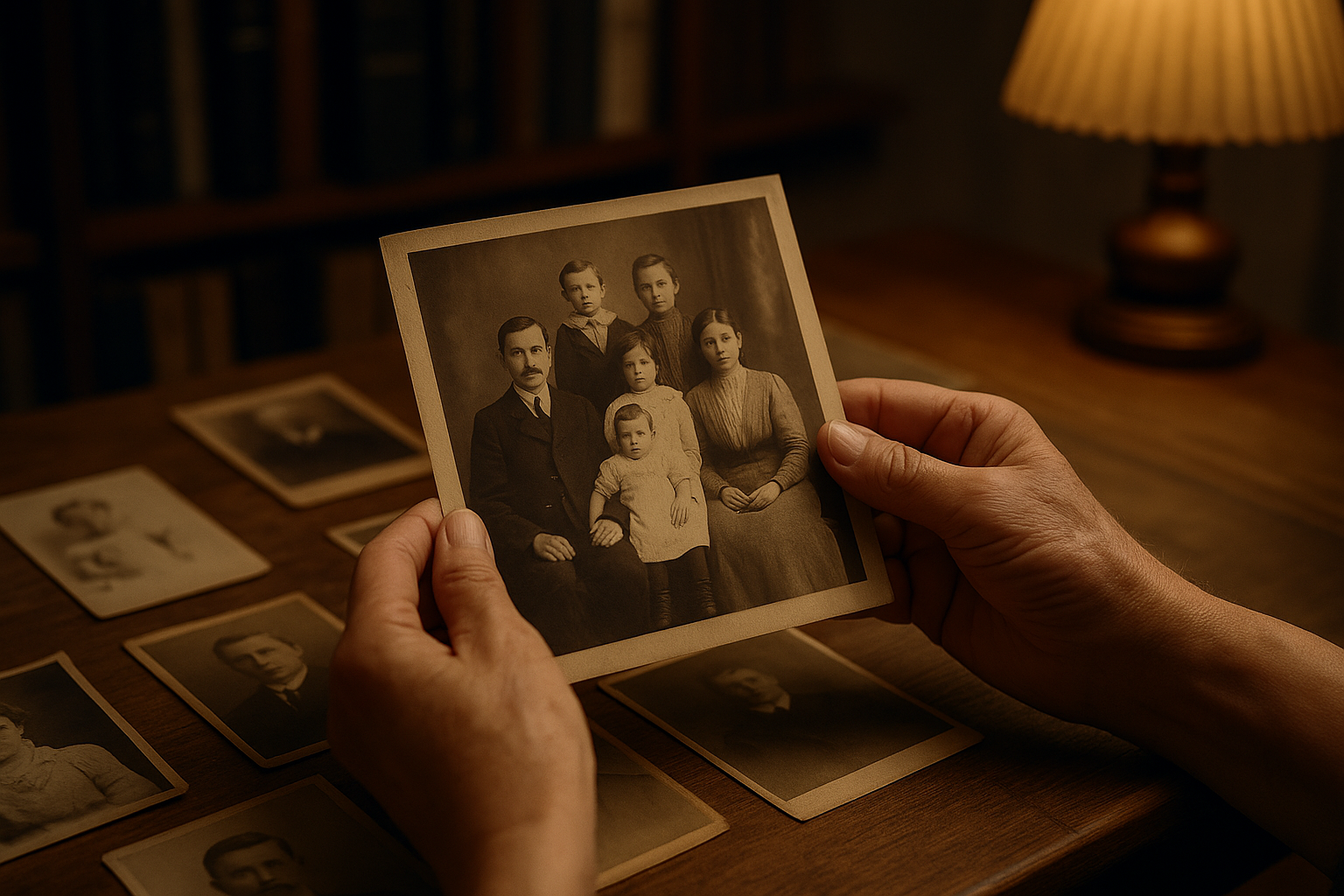
Genealogy 2.0: Using Face Search to Put Names to Old Family Portraits
Genealogy, the pursuit of tracing one's lineage, is a deeply human endeavor. It's about connecting with our past, understanding where we come from, and preserving the stories of those who came before us. For generations, genealogists have relied on birth certificates, marriage licenses, census records, and good old-fashioned detective work to piece together their family trees. But what happens when you stumble upon a box of old photographs, filled with faces you don't recognize? This is where Genealogy 2.0 comes in, powered by the remarkable capabilities of face search technology.
The Frustration of the Unidentified Ancestor
We've all been there. You're sifting through a dusty album, and a captivating image catches your eye. It could be a formal portrait, a candid snapshot, or a group photo at a family gathering. But who are these people? Are they great-grandparents? Distant cousins? The lack of identification can be incredibly frustrating, halting your research and leaving a gaping hole in your family narrative. Traditionally, you'd be forced to rely on aging relatives, hoping they remember a name or a story associated with the photograph. But memories fade, and information is often incomplete.
Enter Face Search: A Revolutionary Tool for Genealogists
Imagine being able to take that unidentified photograph and instantly search for a match across a vast database of faces. That's the power of face search technology. By analyzing the unique facial features in your photo, advanced algorithms can compare it against millions, even billions, of images to find potential matches. This technology, once the domain of law enforcement and security agencies, is now accessible to amateur genealogists, offering a revolutionary new way to identify unknown ancestors and unlock family secrets.
How Does Face Search Work?
At its core, face search relies on sophisticated artificial intelligence and machine learning. Here's a simplified breakdown of the process:
- Facial Detection: The algorithm first identifies the presence of a face within the image.
- Feature Extraction: Once a face is detected, the algorithm extracts key facial features, such as the distance between the eyes, the shape of the nose, and the contours of the jawline.
- Mathematical Representation: These features are then converted into a unique mathematical representation, often referred to as a "facial fingerprint."
- Database Comparison: This fingerprint is then compared against a massive database of facial fingerprints.
- Match Identification: The algorithm identifies potential matches based on the similarity of the facial fingerprints, providing a list of possible candidates.
MambaPanel: Your Partner in Genealogical Discovery
MambaPanel is a leading face search service, offering high-accuracy face recognition with advanced AI technology. With over 7 billion faces in our database, we provide genealogists with an unparalleled resource for identifying unknown individuals in their family photos. Our service is designed to be user-friendly, allowing you to easily upload images and quickly receive potential matches. We understand the importance of accuracy and speed, which is why we've invested heavily in our AI algorithms and infrastructure. Our commitment to 99.9% uptime ensures that you can access our service whenever you need it, allowing you to continue your genealogical research without interruption. We've already helped over 100,000 users complete 300,000+ searches, and we're excited to help you unlock the secrets hidden within your family photos.
Practical Examples: Bringing Your Family Tree to Life
Here are a few practical examples of how face search can revolutionize your genealogical research:
- Identifying Immigrant Ancestors: Many immigrant families have photos of their ancestors arriving in a new country. Using face search, you might be able to find these individuals in historical records, passenger manifests, or even news articles, providing valuable insights into their lives and experiences.
- Uncovering Military Service: If you have a photo of an ancestor in uniform, face search could help you identify their military unit, service dates, and even potential battle records.
- Connecting with Distant Relatives: By identifying unknown individuals in group photos, you might be able to connect with distant relatives who possess additional information or photographs related to your family history.
- Correcting Misidentified Photos: Sometimes, family photos are mislabeled or incorrectly attributed. Face search can help you verify the identities of individuals, ensuring the accuracy of your family tree.
Tips for Using Face Search Effectively in Genealogy
To maximize your success with face search, consider these tips:
- Start with High-Quality Images: The clearer the image, the better the chances of a successful match. Scan old photos at a high resolution.
- Crop and Focus: Crop the image to focus solely on the face of the individual you're trying to identify.
- Try Different Angles: If you have multiple photos of the same person from different angles, upload them all.
- Be Patient: Face search is a powerful tool, but it's not always perfect. Be patient and persistent, and don't be discouraged if you don't find a match immediately.
- Verify Results: Always verify the results of your face search with other sources, such as genealogical records and family accounts.
The Future of Genealogy is Here
Face search technology is rapidly transforming the field of genealogy, providing researchers with a powerful new tool for identifying unknown ancestors and connecting with their past. As databases grow and algorithms become more sophisticated, the possibilities for genealogical discovery are endless. Embrace Genealogy 2.0 and unlock the secrets hidden within your family photos.
Bring your family tree to life. Identify your ancestors.